

As businesses scale, operational complexity increases faster than headcount. Consequently, systems that once worked independently start creating friction instead of efficiency. This is especially true for payroll and HR. Payroll depends on accurate employee data. HR depends on real-time workforce insights. However, when these systems operate separately, errors multiply, productivity drops, and compliance risks rise That is exactly why payroll HRMS integration has shifted from a “nice-to-have” to a strategic necessity.
More importantly, HRMS integration is not just about syncing data. Instead, it is about creating a single source of truth for people’s operations. When payroll and HRMS function as one unified system, businesses move faster, stay compliant, and make better decisions.
In this guide, you will learn:
- What HRMS integration really means
- Why disconnected systems fail at scale
- How unified systems improve accuracy, compliance, and productivity
- Key features, use cases, and best practices
- How to evaluate and implement payroll HRMS integration successfully
What Is Payroll HRMS Integration?
At its core, HRMS integration connects human resource management functions with payroll processing in a single, unified system.
Instead of manually transferring data between platforms, integrated systems automatically share information such as:
- Employee profiles
- Attendance and leave records
- Salary structures
- Tax and compliance details
- Benefits and deductions
As a result, payroll calculations rely on real-time HR data, and HR decisions reflect payroll realities.
Why Disconnected Payroll and HR Systems Fail
Initially, separate payroll and HR tools may seem manageable. However, as teams grow, cracks appear quickly.
Common Problems with Non-Integrated Systems
- Duplicate data entry across payroll and HR platforms
- Frequent payroll errors due to outdated employee information
- Delayed salary processing caused by manual reconciliations
- Compliance gaps due to inconsistent statutory data
- Poor employee experience from incorrect payslips or leave balances
Therefore, disconnected systems introduce operational risk at every payroll cycle.
Why Payroll HRMS Integration Matters More Than Ever
Modern businesses operate in real time. Consequently, HRMS integration has become foundational rather than optional.
1. Accurate Payroll Starts with Accurate HR Data
Payroll accuracy depends on HR accuracy. When HRMS integration exists:
- Employee changes update automatically
- Attendance and leave flow directly into payroll
- Salary revisions apply without manual intervention
As a result, payroll errors drop significantly.
2. Compliance Becomes Built-In, Not Reactive
Regulatory requirements change frequently. However, integrated systems reduce compliance stress by design.
Payroll HRMS integration ensures:
- Statutory deductions calculate automatically
- Employee classifications remain consistent
- Audit trails stay complete and centralized
Therefore, organizations stay audit-ready at all times.
3. Faster Payroll Processing, Every Cycle
Manual payroll processing wastes valuable time.
With HRMS integration:
- Data synchronization happens instantly
- Payroll teams avoid repetitive tasks
- Processing cycles shrink dramatically
Consequently, HR and finance teams focus on strategy rather than corrections.
4. A Single Source of Truth for Workforce Data
Fragmented data creates confusion. Unified systems create clarity.
Payroll HRMS integration delivers:
- Consistent employee records across departments
- Real-time workforce visibility
- Accurate cost and headcount reporting
As a result, leadership makes decisions based on facts, not assumptions.
Key Benefits of Payroll HRMS Integration
Below are the most impactful advantages businesses experience after implementing HRMS integration.
Operational Benefits
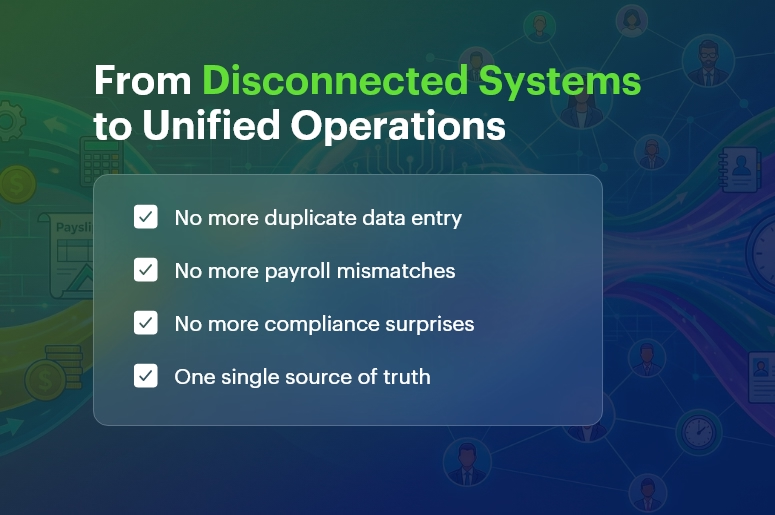
- Elimination of duplicate data entry
- Reduced payroll rework and adjustments
- Streamlined onboarding and offboarding
Financial Benefits
- Accurate payroll cost forecasting
- Better control over overtime and variable pay
- Fewer penalties from compliance errors
Employee Experience Benefits
- Timely and accurate salary payments
- Transparent payslips and leave balances
- Faster resolution of payroll queries
Core Features to Look for in Payroll HRMS Integration
Not all systems deliver true integration. Therefore, it is critical to evaluate features carefully.
Must-Have Integration Capabilities
- Centralized employee database
- Real-time attendance and leave sync
- Automated payroll calculations
- Compliance and statutory configuration
- Role-based access controls
- Audit logs and payroll reports
Without these, HRMS integration remains incomplete.
How Payroll HRMS Integration Supports Business Growth
Growth exposes inefficiencies. Unified systems absorb complexity.
Scaling Without Chaos
When businesses scale:
- New hires increase payroll complexity
- Multiple locations introduce compliance variations
- Workforce structures become more dynamic
Payroll HRMS integration enables:
- Faster employee onboarding
- Consistent payroll policies across locations
- Scalable compliance frameworks
Therefore, growth becomes controlled rather than chaotic.
Industry Use Cases for Payroll HRMS Integration
SMBs and Startups
- Limited HR staff need automation
- HRMS integration reduces dependency on manual work
Mid-Market Companies
- Growing headcount demands accuracy
- Integrated systems prevent payroll bottlenecks
Enterprises
- Multi-entity and multi-state compliance becomes manageable
- Unified reporting improves governance
Implementation Best Practices for Payroll HRMS Integration
Successful HRMS integration requires planning.
Recommended Implementation Steps
- Audit existing payroll and HR processes
- Clean and standardize employee data
- Define payroll policies clearly
- Configure statutory and compliance rules
- Test payroll cycles before full rollout
- Train HR and payroll teams thoroughly
Following these steps minimizes disruption and maximizes ROI.
Common Mistakes to Avoid
Even strong systems fail if implemented poorly.
Avoid these pitfalls:
- Treating payroll integration as an IT project only
- Ignoring data cleanup before migration
- Underestimating compliance configuration
- Skipping parallel payroll testing
The Future of Payroll HRMS Integration
Looking ahead, HRMS integration will become even more intelligent.
Emerging trends include:
- AI-driven payroll anomaly detection
- Predictive workforce cost analytics
- Automated compliance updates
- Self-service employee payroll insights
Businesses that adopt unified systems early will gain a lasting advantage.
Final Thoughts: Why Unified Systems Matter
Payroll touches trust. HR touches people. When these systems operate together, organizations gain control, confidence, and clarity.
HRMS integration is no longer about convenience. Instead, it is about:
- Accuracy at scale
- Compliance without stress
- Productivity without friction
- Growth without operational breakdown
If your payroll and HR systems still operate separately, the real cost is not software — it is lost time, increased risk, and missed opportunity.
Unified systems are not the future.
They are the present.
FAQs
1. What is payroll HRMS integration?
HRMS integration is the process of connecting payroll processing with human resource management functions in a unified system so employee data, attendance, leave, compensation, and compliance details flow automatically without manual intervention.
2. Why is HRMS integration important for growing businesses?
As organizations scale, manual data transfers and disconnected systems lead to errors, delays, and compliance risks. HRMS integration ensures accuracy, efficiency, and scalability while reducing operational friction.
3. How does HRMS integration improve payroll accuracy?
Integrated systems use real-time HR data for payroll calculations. As a result, updates to employee profiles, attendance, leave, or salary structures reflect instantly, significantly reducing payroll errors.
4. Does HRMS integration help with statutory compliance?
Yes. HRMS integration automates statutory calculations, maintains consistent employee classifications, and creates centralized audit trails, helping businesses stay compliant and audit-ready.
5. Can HRMS integration reduce payroll processing time?
Absolutely. By eliminating duplicate data entry and manual reconciliations, integrated systems shorten payroll cycles and allow payroll teams to process salaries faster each month.
6. What features should a good payroll HRMS integration include?
A robust HRMS integration should offer a centralized employee database, real-time attendance and leave sync, automated payroll calculations, statutory compliance configuration, role-based access, and audit-ready reporting.
7. How does HRMS integration improve employee experience?
Employees receive accurate and timely salaries, transparent payslips, correct leave balances, and faster resolution of payroll-related queries, leading to higher trust and satisfaction.
8. Is HRMS integration suitable for small businesses?
Yes. Small businesses benefit significantly because integration reduces reliance on manual processes, minimizes errors, and allows lean HR teams to operate efficiently.
9. What are common mistakes to avoid during payroll HRMS integration?
Common mistakes include skipping data cleanup, underestimating compliance configuration, treating integration as an IT-only project, and failing to test payroll cycles before full deployment.
10. How does HRMS integration support long-term scalability?
Integrated systems handle increasing headcount, multi-location compliance, and complex workforce structures without breaking processes, enabling controlled and sustainable growth.